
Welcome back following the election!
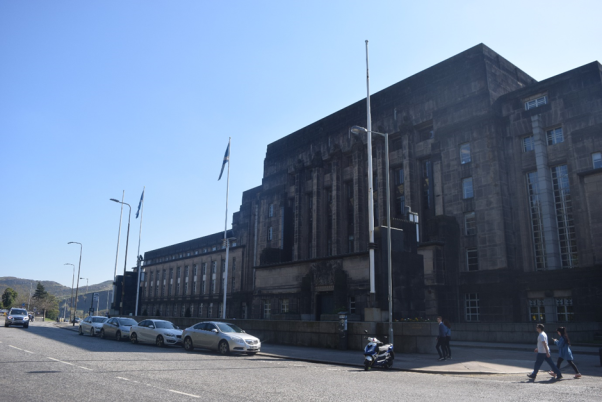
The people have spoken and a new Scottish Parliament is in place. Yesterday MSPs elected John Swinney MSP as First Minister, and he is currently appointing his ministerial team.
This Insight considers some of the fiscal and economic challenges facing the new government.
The funding outlook is constrained and uncertain
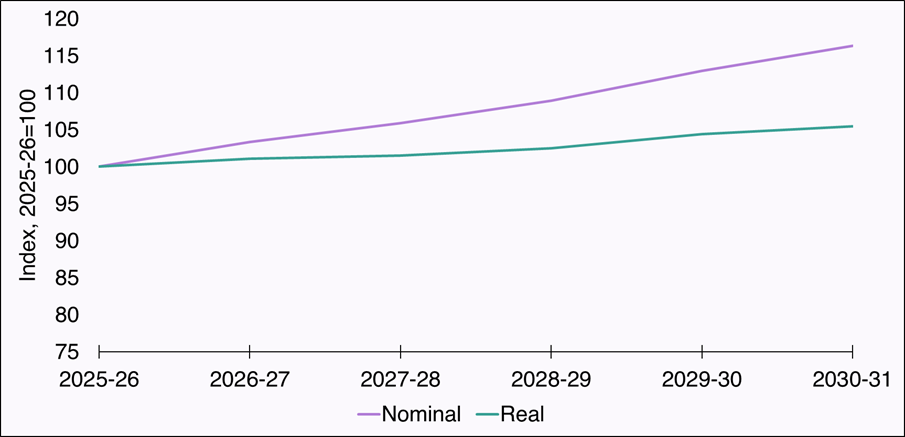
In our January forecast we highlighted the tight outlook in day-to-day funding for running Scotland’s public services. After adjusting for inflation, we projected day-to-day spending to increase by 1 per cent per year over the next 5 years. Our next set of funding projections alongside the Scottish Budget will update the outlook for the next five years. While some additional funding was provided in the most recent UK Government Spring Statement, we expect the funding outlook to remain broadly similar and still constrained.
Figure 1: Day-to-day funding outlook
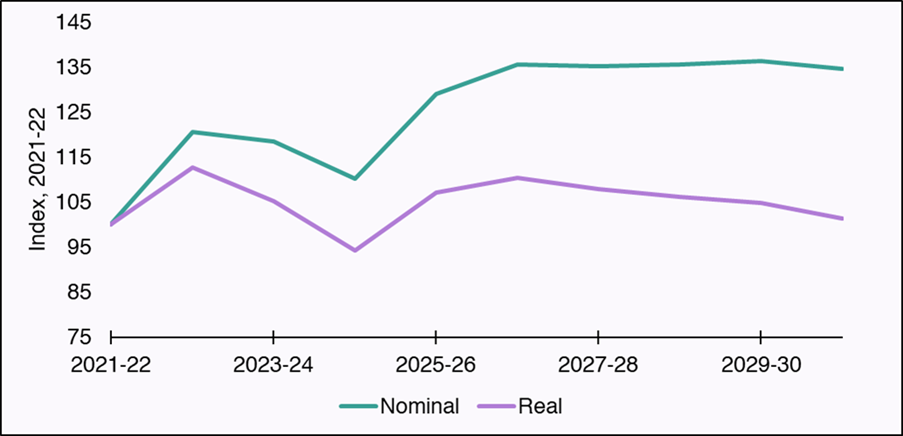
There are similar constraints facing capital funding for investment in infrastructure and assets – things like schools, roads, computers and hospital equipment. Having see-sawed in the previous Parliament, infrastructure spending is expected to fall in real terms over the course of the new parliamentary term.
Figure 2: Capital funding
Recent events in the Middle East are expected to put additional strain on the economy and public finances. With increases in inflation expected, this funding outlook may be more constrained, and higher inflation is also likely to feed through to higher costs of delivering public services. Our Insight tomorrow will discuss the effects of the Middle East conflict on the economy in more detail.
The economic outlook is subdued and uncertain
Even before current events in the Middle East, the economic outlook was relatively subdued. In January, our forecasts suggested the Scottish economy would grow by around 1.4 per cent per year on average over the next five years, and the risk that growth could be lower than this is increasing. We expected this to result in only small improvements in living standards over the next Parliament.
The population is ageing
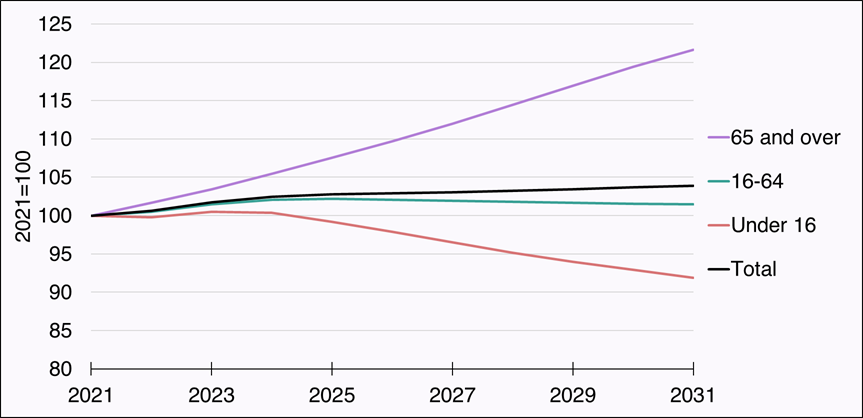
The implications of demographic change will be another important consideration for the new government in deciding how it allocates resources to public services. In Scotland the population aged over 65 is projected to rise by over 20 per cent between the start and end of this decade.
Older populations tend to have higher demand for health and social care services, and for disability benefits, which are now devolved to the Scottish Government.
Figure 3: Population projections by age group
Pressure on public finances may require difficult policy choices
Social security spending has grown significantly in recent years not only because of higher disability prevalence across all ages in Scotland, but also because some of the Scottish Government’s policy choices differ to the rest of the UK. For example, the Scottish Child Payment (introduced to help tackle child poverty) is a Scotland only benefit that is worth around £28 per week per child, which we forecast will cost around £500 million this year.
Public sector pay in Scotland tends to be higher than the rest of the UK and makes up around 55 per cent of day-to-day Scottish Government spending. With inflation ticking up again, this will be another pressure facing the new Government.
To help address these challenges, the previous Scottish Government proposed £1.5 billion of efficiency savings to be delivered over the next three years, as well as reductions to the overall devolved public sector workforce. Delivering such savings will be challenging, particularly in a context of higher inflation caused by events in the Middle East feeding through to cost of living pressures.
What’s next for us and the new Parliament?
Economic uncertainty has been a near constant feature of life this decade – from the COVID pandemic, the Russian invasion of Ukraine, tariffs, to the current crisis in the Middle East. This presents challenges for forecasters, governments and parliaments alike.
We will have more to say in the coming weeks and months in our Insights and other publications. Our Fiscal Update, due to be published on 25 August, will set out the latest funding position for the Scottish Government, and will contain further analysis on ramifications of events in the Middle East on the economy and public finances.
In Parliament, new Committees will likely be formed in June, prior to Parliament breaking for recess. We look forward to working with them and all MSPs in supporting scrutiny and understanding of the fiscal and economic outlook.