
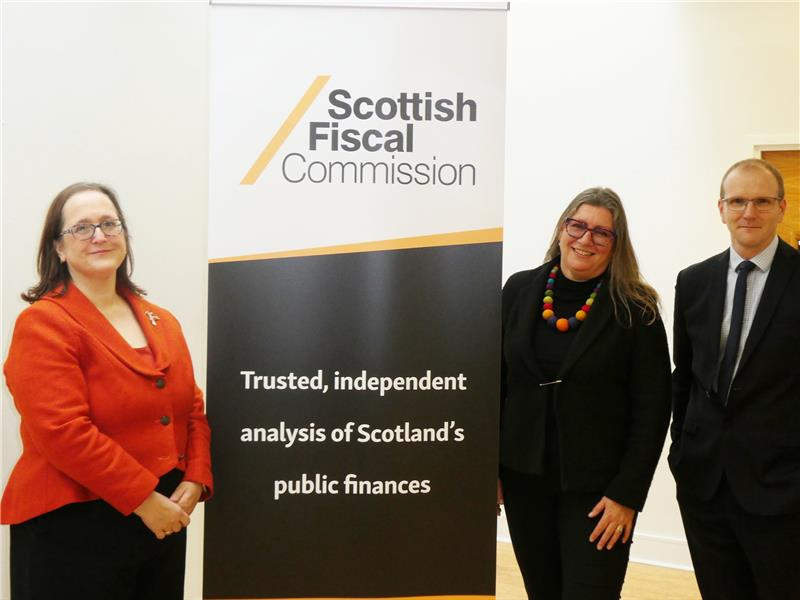
We are about to recruit our fourth Commissioner. We asked our two most recently appointed Commissioners to share their experiences of joining the Scottish Fiscal Commission (SFC) in October 2025.
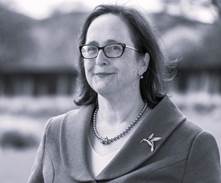
Eleanor Ryan: it felt like coming home
Looking back over my career, I realise how fortunate I’ve been. From a part-time summer job in a bookshop, through a range of public service roles, to running my own business in recent years. I’ve had some great experiences.
These experiences taught me that the things I care about are good colleagues, meaningful work, public service and the opportunity to keep learning. Becoming a Scottish Fiscal Commissioner felt like coming home.
What does a Commissioner do?
Commissioners are responsible for everything that the SFC produces. We are supported by a small, very talented team of staff who gather and analyse the data, manage technical issues and develop the evidence that underpins our forecasts and reports.
Our role is to oversee that work, make decisions about priorities and methodology, and ensure our findings are communicated clearly. We meet regularly with staff to discuss developments across our work programme and to consider areas where judgement is required.
Forecasting inevitably involves judgement. Whether considering future earnings growth or trends in disability benefit applications, Commissioners must take responsibility for the conclusions reached and explain them to Parliament and the public. Those discussions are often fascinating and sometimes challenging, but they are central to the role.
Commissioners are also responsible for the SFC’s governance. Like any public body, we must meet high standards of accountability while safeguarding the independence and objectivity that are fundamental to our work. In both our analytical and governance responsibilities, success often comes down to asking the right questions and working with colleagues to answer them.
The best thing about the SFC is the people
The staff team’s expertise, professionalism and commitment make our work possible. Equally important are the other Commissioners. We bring different backgrounds, skills and perspectives, which helps us avoid groupthink and strengthens our decision-making.
No one is expected to arrive with expert knowledge of every aspect of the SFC’s work. New Commissioners receive a comprehensive induction, and learning continues long after that. Commissioner meetings are supportive environments where questions are encouraged, and staff are always willing to challenge assumptions or highlight issues that might otherwise be overlooked.
That culture of mutual challenge and support is one of the organisation’s greatest strengths.
Are there any downsides?
For me, not many.
Anyone attracted to this role is likely to enjoy numbers and analysis. My only minor frustration is that I do not get to carry out the analysis myself. On the other hand, the role offers the chance to see the bigger picture and make connections across all of the SFC’s work.
The role can also be demanding at certain points of the year. Commissioners are expected to work an average of around one and a half days a week, although this varies considerably over the year. Publication periods can be particularly busy, with tight deadlines and increased demands on our time. Fortunately, the staff team plan these periods carefully, so they don’t come as a surprise.
Commissioners must also be prepared to speak publicly, whether before Parliamentary committees, at events or in the media. That can feel daunting at times, but engaging with different audiences ultimately improves our work and helps us explain it more effectively.
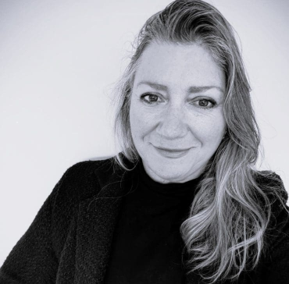
Justine Riccomini: Think again if you believe your experience is not relevant
When I started my career as an interior designer in Marbella in the mid-1980s, designing show homes, apartments and yachts, nobody would have predicted that I would later spend 37 years working in tax across HMRC, private practice and a professional body before becoming a Commissioner at the Scottish Fiscal Commission.
Careers are rarely linear. Different experiences, knowledge and perspectives all have value and can contribute to the strategic and independent thinking required in an organisation such as the SFC.
I am not an academic, but throughout my career I have been expected to solve problems, consider alternatives and find practical solutions. Influenced by a family of engineers and inventors, I have long believed that there is a solution to every problem if you are prepared to engage with the detail, understand the dynamics and work collaboratively with others.
For that reason, I would encourage anyone who thinks their background is not an obvious fit for the SFC to think again. If you are strategic, analytical and detail-oriented, and have experience in economics, tax, finance, business, the charity sector, government or beyond, you may have more to offer than you realise.
Learning and contributing
The Commissioner induction programme is an excellent introduction to the organisation and the people who make it work. The quality of the staff team continues to impress me. They provide the support and expertise Commissioners need while encouraging open discussion about methodologies, public understanding, organisational reputation and risk.
A key part of the role is understanding when you need to be available. Commissioners are required to attend meetings, review publications in detail and occasionally give evidence to Parliament. You need to be comfortable speaking publicly and acting as a visible representative of the organisation.
The workload fluctuates throughout the year. Activity is often shaped by ministerial decisions, political developments, budgets, elections and wider economic events. As a result, there are quieter periods alongside busier and more demanding ones, making flexibility essential.
A rewarding challenge
It is a privilege to serve as a Commissioner. I am supported by dedicated colleagues, both among the Commissioners and within the staff team.
My move into economic and fiscal forecasting involved a steep learning curve, but I have embraced it as part of a lifelong commitment to learning. The first six months were an intensive period of self-education, and the effort has been well worth it. Alongside my Commissioner responsibilities, I chair the SFC’s Audit and Risk Committee, which brings a different but equally rewarding set of challenges.
For anyone considering this opportunity, I can say that the role is intellectually stimulating, varied and meaningful. Above all, it offers the chance to contribute to an organisation that plays an important role in supporting transparent and well-informed public finances in Scotland.